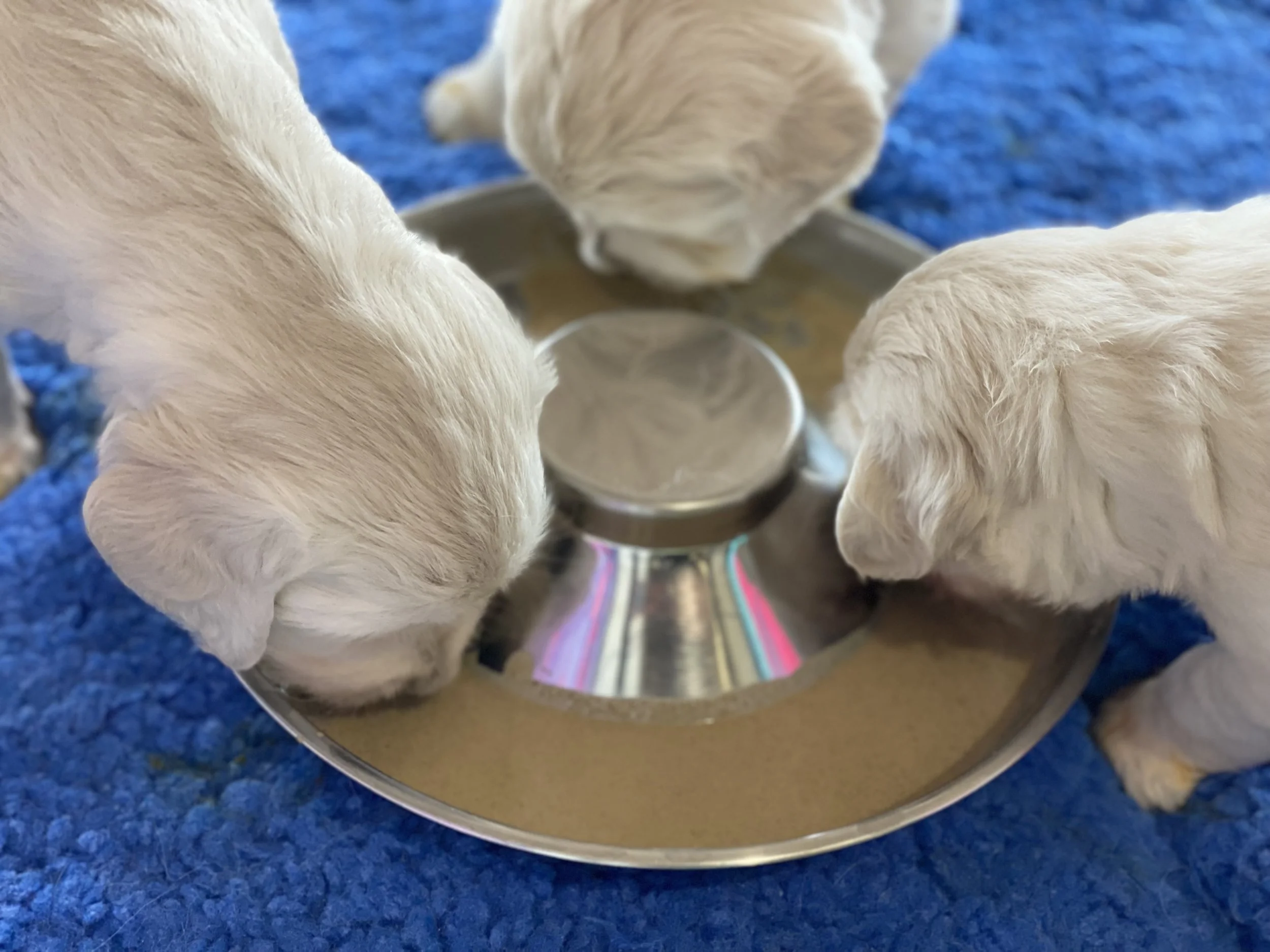
Nutrition
We believe nutrition should be thoughtful, consistent, and supportive of long-term health—without becoming overwhelming or complicated.
There is no one perfect way to feed a dog, but there are principles that matter.
Our approach focuses on balance, quality ingredients, and supporting each stage of development with intention.
Our Approach
We do not follow extremes or trends.
Instead, we focus on providing a balanced foundation that supports growth, digestion, and overall well-being.
Our goal is simple:
to raise dogs that are healthy, stable, and able to thrive long-term.
What We Feed
Our dogs are fed a high-quality kibble as their foundation, paired with fresh, whole-food additions in a way that supports—not disrupts—balance.
We currently feed:
Farmina N&D (Cod & Spelt) as our primary base diet
In addition, we incorporate:
Fresh eggs
Kefir or goat milk
Occasional fresh/raw toppers (used thoughtfully, not excessively)
This approach allows us to maintain consistency while still supporting gut health and variety.
In addition to their base diet, we may rotate in nutrient-rich whole food sources such as sardines and other fresh additions as part of a balanced approach.
Our adult dogs also have access to natural outdoor environments where they may interact with and graze on safe garden elements such as greens, supporting natural behaviors and enrichment.
Early Exposure to Fresh Foods
During their time with us, puppies are thoughtfully introduced to a variety of fresh, whole foods as part of their early development.
They are exposed to natural textures and real foods, including vegetables, fruits, and fresh additions in a way that supports exploration, confidence, and adaptability.
Puppies may have opportunities to interact with fresh foods such as garden vegetables and greens, allowing them to experience different textures, smells, and tastes in a safe and controlled environment.
We also introduce small amounts of fresh meats as part of early exposure, helping puppies become comfortable with a variety of food sources.
These exposures are not intended to replace a complete and balanced diet, but rather to:
support digestive adaptability
encourage confidence with different foods and textures
promote natural curiosity and engagement
Many of our puppies leave already comfortable with a wide variety of foods, which can make feeding and future transitions easier for their families.
Continuing fresh additions at home is completely optional and can be done based on your comfort level and lifestyle.
Feeding Puppies
Puppies are raised on a consistent, balanced diet to support proper growth and development.
At the time they go home, they are:
Eating confidently
On a predictable feeding schedule
Transitioned in a way that supports digestion
We strongly recommend keeping your puppy on the same food initially to avoid unnecessary stress or digestive upset.
If changes are made, they should be done gradually and with intention.
Supplements
We take a simple and intentional approach to supplementation, using only what supports our dogs’ overall health and long-term well-being.
Our dogs may receive:
• Omega-3 support through fish oil or whole food sources such as sardines, supporting skin, coat, and inflammation balance
• Joint and structural support as needed, particularly for growing large breed dogs, active adults, and seniors
Support may include nutrients that help maintain:
joint health
connective tissue
muscle support and overall mobility
Because every dog is different, we do not follow a one-size-fits-all supplement plan and instead adjust based on age, activity level, and individual needs.
When using omega-based supplements, we are mindful of overall balance and adjust accordingly.
Supplementation is used thoughtfully and is not required for families to replicate at home.
Maintaining a healthy weight, proper conditioning, and controlled growth are the most important factors in supporting long-term joint health.
Pregnancy & Development
During pregnancy and early development, nutrition becomes even more important.
We prioritize:
Consistency
Balanced intake
Avoiding unnecessary additions that may interfere with natural processes
Our goal is to support healthy pregnancies and strong, well-developed puppies without overcomplicating their care.
Final Thoughts
There are many ways to feed dogs, and strong opinions on all sides.
Our approach is built on experience, observation, and what has consistently produced healthy, thriving dogs over time.
We are always learning, but we remain grounded in what works.
Resources
We believe in educating our families, not overwhelming them.
The resources below reflect the principles we use in raising and developing our dogs.
Food & Nutrition
A closer look at the research and standards behind the food we choose.
Farmina Vet Research
An overview of the research and veterinary standards behind their formulas.
Growth & Development
Why how puppies grow matters just as much as what they eat.
Understanding Puppy Development & Growth Plates
Puppies are not miniature adult dogs. Their bones are still developing, and their joints are especially vulnerable during early growth. This article helps explain why things like jumping, repetitive impact, and overexercising too young can affect long-term structure and soundness.
Puppy Fitness That Fits the Puppy – Jane Killion
Not all exercise is beneficial for a growing puppy. This resource explains how to provide age-appropriate movement that builds strength, confidence, and coordination without putting unnecessary stress on developing joints.
Improving Hips and Elbows Through Environment
Genetics play a role in joint health, but environment matters just as much. This article explores how surfaces, activity, and daily lifestyle can influence long-term hip and elbow development.
Veterinary Approach
Thoughtful, evidence-based approaches to long-term health.
Titer Testing vs. Annual Vaccinations
This resource explains the difference between routine vaccinations and measuring existing immunity through titer testing, helping owners make informed decisions about long-term health care.
Training & Behavior
Building confident, stable dogs through early experiences and communication.
Puppy Socialization (AVSAB Position Statement)
Early socialization is one of the most important parts of raising a well-adjusted dog. This article explains how to safely and thoughtfully expose puppies to the world during critical development periods.
Sit Does Not Mean Sit – Giving Puppies a Voice
Puppies are constantly communicating, even before formal training begins. This article highlights the importance of understanding behavior, not just teaching commands.
Barking – Understanding the Why Behind Behavior
Barking is a form of communication, not just a problem to correct. This resource helps explain the different reasons dogs bark and how to respond appropriately.
Spay & Neuter Timing in Golden Retrievers
We encourage families to make informed, thoughtful decisions when it comes to spay and neuter timing.
Research continues to show that early spay and neuter in large breed dogs may impact joint development and long-term health.
This UC Davis study provides one of the most widely referenced, research-based overviews to help guide that decision.